
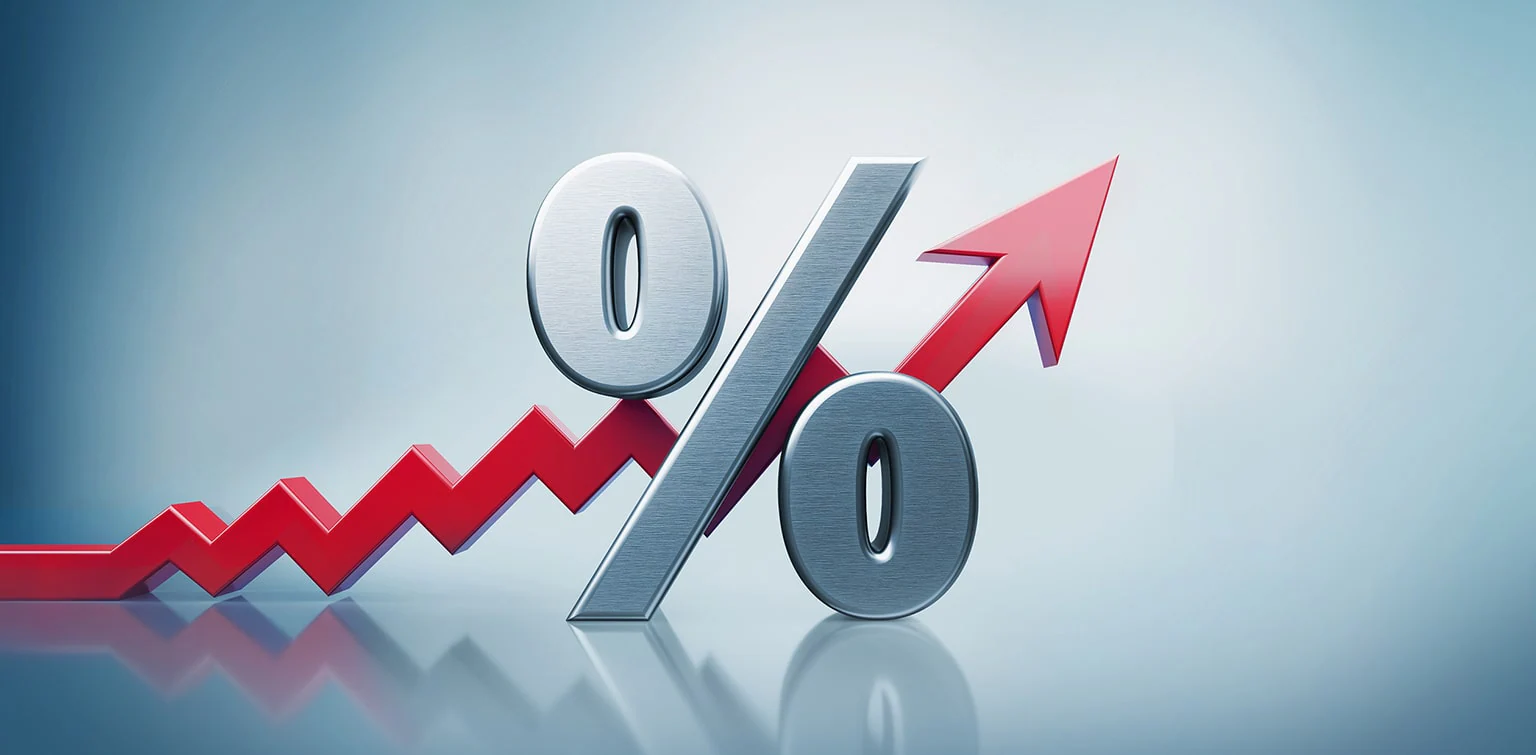
The recent growth in loan rates across banks and the United States has caused a wave of outrage among the 37% of American households (Ramsey 1) who have taken some form of a loan and 40% Americans (Hanna 1) who say they need to obtain a new loan in order to support a variety of personal matters such as their households, education, and medical bills. There are now a multitude of questions surrounding the future use of monetary loans. Will interest rates on loans keep rising? Will the minimum principal for a loan be increased? What is the most informed strategy towards securing a suitable loan?
Why are loan interest rates increasing?
The increase in loan interest rates can be attributed to a plethora of factors. For example, interest rate levels are a major factor between the supply and demand of credit, so an increase in the demand of money means the increase in interest rates. The reasoning behind this is that when there is an increase in the amount of money circulating, but a decrease in the demand of money, there will then be a decrease in interest rates. Inflation rates are also responsible for the increase in interest rates. This is because the lender, the party who distributes the money, charges a higher interest rate when inflation is high as compensation for the decrease in buying power. The government also plays one of the biggest parts in determining monetary policy decisions which heavily affect factors like inflation and consumer decisions which all heavily impact loan interest rates. The way they do this is by changing the rates and levels of taxes, the amount of money in circulation, and spending policies, all of which heavily impact inflation and consumer rationality.. The COVID-19 pandemic can also be considered as it increased interest rates specifically on mortgage loans by 11.5%, and attributed to the growth of inflation due to its impact on the economy.
When are loan rates expected to start decreasing?
There are many different types of loans like student loans, home-equity loans, and mortgages all of which are forecasted to be fluctuating at different rates. It is nearly impossible for any individual to say with certainty that interest rates will decrease to a certain level, however, the group of government officials part of the FOMC (Federal Open Market Committee) can do so. The FOMC is responsible for creating monetary policies to reach the interest rates that they forecast. The way that they set interest rates is by evaluating forecasts of how aspects of the market like employment and inflation will fluctuate for a 6, 12, and 18 month period in the future, and making monetary policies to adapt to those fluctuations. The FOMC claims that inflation will cool down to 3.5 percent to 2.0 percent in 2024-2025, which means that interest rates will also decrease as a result. Additionally, for certain loans such as auto-loans and personal-loans, interest rates are already seen decreasing by many basis points. However, it is impossible to know exactly if interest rates will decrease to a certain percentage, because that is something that the government does not have control over.
To-Do’s to optimize your own loan
Although loan interest rates are forecasted to decrease, it is essential to make sure that you are getting the most out of your current loans. Firstly, make sure that your loan has the lowest APR compared to other financial institutions. This is essential to keep in mind because a higher APR means the amount of money you have to repay on the loan will increase, and there is no point in spending unnecessary money. Explore offers from other institutions like credit unions, central banks, and retail and commercial banks, which all offer different APR’s and conditions in their loans, and might be more suitable for your financial situation. Additionally, ensure that your own credit score is at an acceptable level; typically, above 700 is considered “good” by the majority of financial institutions. This can help decrease your APR since a good credit score is seen as a sign of trustworthiness and reliability by financial institutions, giving them more confidence to lend you a loan since you have a history of reliability regarding financial payments. Lastly, consider adding a co-signer or collateral to your loan repayment plan, because this can be seen as a sign of solidity and responsibility by financial institutions which would encourage them to reduce your APR. However, to get the most suitable advice for your financial situation, contact your local investment advisor or bank representative.
Conclusion
In conclusion, the future of interest rates on loans seems extremely unclear. Although the government has taken steps to work against the rise of inflation and interest rates such as the Inflation Reduction Act and interest rate cuts, there is no certain answer as to when interest rates will decrease to a level where loans are widely available for the 77% of American households that are in debt (Ramsey 1). However, if you take the proper steps to optimize your loan, then you will avoid spending unnecessary money, and optimize your overall financial situation.


